Being a Blockhead

5 August 2025

“No man but a blockhead ever wrote, except for money.” So said Samuel Johnson, and he was a better positioned observer than most people. I’m certainly guilty of writing for reasons other than money, so I guess that makes me a blockhead. If you’re interested in being a blockhead too, and you want my advice, I wrote it up a while back.

I also want to draw your attention to a treasure trove of writing advice at The Marginalian. She’s taken the trouble to consult a pile of working writers, and the results are worth your time.


Seven Laws of (Magical) Reality

22 June 2024

One of the major projects before us as a church in the 21st-century WEIRD (Western, Educated, Individualistic, Rich, Democratic) world is repenting of our concessions to modernism, and returning to the worldview of the Bible. I know you’re thinking “We’ve been on top of this Christian worldview thing since Francis Schaeffer,” but no, we haven’t. Schaeffer made a great start. Ministries like Summit have done wonders for us. But we have a long way to go yet to recover a truly biblical grasp of the world and our place in it. I have something that will help: a “sort-of-manifesto” for Bnonn and Smokey Tennant’s podcast True Magic, laying out their founding principles, which (spoiler alert) are as follows:

  1. Physical things participate in spiritual patterns.
  2. Physical things therefore have meaning.
  3. We participate in the same spiritual patterns at different levels.
  4. There is an order of being that flows down from God.
  5. Heaven and earth participate together in Man.
  6. Therefore, Man must live liturgically.
  7. To live liturgically, we must study both Man and Scripture.

I’ll let you read their elaboration on each of the principles for yourself. Suffice to say, this is the kind of thinking we need to be doing more of.


People Like You

18 June 2024

Miles Smith of Mere Orthodoxy was kind enough to read a stack of exvangelical memoirs for us. For those of you who are blessedly unfamiliar with the trend, this is now a whole subgenre of personal memoir. You, too, can be applauded as courageously speaking truth to power, if only you will very publicly break up with the church, preferably on Instagram. You might even get a book deal out of it. Mr. Smith has done us all a service, plowing through a number of such books in order to discuss some of the common elements. He writes:

“Fundamentally, exvangelicals seemed to have been told that a specific type of church was the true church, that true faith probably didn’t exist outside of it, and that the leaders of those churches could speak with near ex cathedra authority on any issue they deemed important.  The specifics may change from church to church–some tended to be vaguely charismatic, others strict dispensationalists, and still others a kind of independent folk Calvinist. But all shared a certain exclusivity and clericalism that defined their existence. These churches and this culture were governed ostensibly by the Bible, but ultimately it was a faith defined primarily by individual pastors….Enough of these churches led by enough of this clericalist type of minister popped up between 1970 and 2000 to build an entire subculture.”

Just a Subculture?

Speaking from my experience ministering to people who’ve abandoned their faith, I agree that a number of them fit Smith’s profile, which is to say that (in rough generalities) they come from churches that mix generic doctrinal orthodoxy with cult-of-personality sociology. I’ve been at war with that defective ecclesiology my entire adult life. I cut my teeth in ministry doing counter-cult work with the victims of exactly that sort of ministry. Upon hearing their stories, I’ve surprised quite a number of exvangelicals from such churches by responding, “Well, you can’t go back to that!” (And they shouldn’t, either. There are plenty of faithful-if-flawed churches to fellowship with; no need to get tangled up in a cult.) But look, while we all agree that cults of personality are a bad idea, that’s hardly the whole story with exvangelicals.

Plenty of these folks don’t fit that profile, and Smith himself mentions one of them when he wonders aloud why so many people listened to Bill Gothard and Joshua Harris. It’s a good question (which I’ve discussed elsewhere), but the point for the moment is that he’s aware of Joshua Harris, himself now an exvangelical. Harris didn’t grow up the downtrodden follower of some clericalist mini-pope out in the swamps, thinking his church was The Only True Church. He grew up speaking all over the country in churches and at conferences, and attended seminary at Regent College in Vancouver before abandoning his faith. The exvangelical phenomenon is not confined to the isolated backwaters.

Politics and Pentecostals…

Smith’s article focuses quite a bit on both recent politics and the charismatic movement with regard to his exvangelical interlocutors. Bethel Church gets a mention, as does Greg Locke’s Global Vision Church, and the word “Trumpist” also comes up a surprising number of times for a short article. The overall effect is to give the impression that you’re seeing a wave of these “I used to be a Christian, but…” books because independent churches with no historical roots got themselves tangled up with Trump and Pentecostalism, and people understandably fled. (If only we’d all remained mainline, cessationist, and respectably centrist, how faithful we would be!) In keeping with that, there’s a definite class-oriented vibe in Smith’s piece. Trump’s appeal is populist, Pentecostalism is famously working-class, particularly in the South, and there’s a certain looking-down-the-nose, “Isn’t this a bit regrettable” tone in the article, especially in its conclusion: “We sometimes accuse exvangelicals of leaving ‘Protestant churches.’ I’m not so sure they did.” I began to wonder about Smith’s background: I made a bet with myself that he was a southern Episcopalian.

Upon a little research, I discovered that Dr. Miles Smith IV (Ph.D. in history, 2013) is Anglican (ACNA), “a native Carolinian,” and a Citadel M.A. graduate who, in addition to his serious work, “sometimes writes for popular outlets like Mere Orthodoxy, The Gospel Coalition, Public Discourse, The Federalist, and The University Bookman.” Call me crazy, but my Appalachian fundie-trained nose could smell the clubby, upper-crusty Southern Anglican aspirations coming off Smith’s article. As you might have guessed by now, Gentle Reader, I do not find this an endearing trait, but that’s fine; Jesus transcends all our tribal affinities. Miles Smith and I both belong to Christ, and therefore to one another, and anything that stands in the way of our unity is future ash in the Kingdom of God. For today, the point is that you should not be lulled by Dr. Smith’s complacent sense that exvangelicals don’t come from the same places that we real Protestants do.

…and you

I do appreciate Dr. Smith’s sacrificial act, slogging through a stack of self-justifying exvangelical accounts so the rest of us don’t have to. Speaking as a pastor who actively works with such people on a regular basis, I think Smith’s treatment tells some truths, but falls woefully short of really capturing the exvangelical phenomenon. The whole truth is a good bit less comfortable: while some of the folks who abandon the faith come from insular, low-caste swamps on the working-class side of the tracks, rather a lot of them are more like Joshua Harris: well-resourced, experienced, and connected to multiple institutions. (And not all of them admit to having abandoned the faith, but that’s a subject for another time.)

It would be comforting to believe that people like us (“real” Protestants, or whatever) know too much to fall for the temptation to abandon the faith, but it’s just not true. We’re not just losing people from the margins; we’re losing people like you–and your kids. Cool-shaming can work on anybody, and seems to work particularly well on people who aspire to respectability–or as C. S. Lewis put it, a place in the Inner Ring. The antidote is as simple as it is painful:

“Therefore Jesus also, that He might sanctify the people with His own blood, suffered outside the gate. Therefore let us go forth to Him, outside the camp, bearing His reproach, for here we have no continuing city, but we seek the one to come. Therefore by Him let us continually offer the sacrifice of praise to God, that is, the fruit of our lips, giving thanks to His name; but do not forget to do good and to share, for with such sacrifices God is well pleased.” (Heb. 13:12-16)

UPDATE: Dr. Smith recently discussed his article with Aaron Renn.


An Unexpected Baptism

5 March 2024

The year was 1994. Trent Reznor was 29 years old, and his industrial rock band, Nine Inch Nails, was completing work on its paradoxically-named second studio album, The Downward Spiral. The band had already seen substantial success: their first studio album Pretty Hate Machine (1989) went triple platinum, and their EP Broken (1992) went platinum as well. NIN t-shirts were ubiquitous in high school hallways, as some of us are old enough to remember.

The final cut on The Downward Spiral, “Hurt,” written by Reznor, was released in early 1995 as a promotional single in advance of the full album. The song charted at #8, and judging from the album’s 3.7 million sales, “Hurt” did its job. “Hurt” would also garner Reznor a nomination for best rock song at the 1996 Grammys. (Nor did the song lose its appeal with age; by 2020, NIN had 9 studio albums and 3 EPs out, and Billboard ranked “Hurt” #3 on its list of NIN’s all-time best songs.)

By the numbers, Reznor was on an upward spiral, but the song itself tells a radically different story. Watch the live performance, listen closely to the music, with its intermittent nail-on-the-chalkboard theme, and note the imagery that Reznor chose to show his audience to go along with the lyrics. How does that hit you?

Hold that thought.

Fast-forward to the early 2000s. Producer Rick Rubin is working with an aging Johnny Cash, and–not without some difficulty–convinces Cash to cover “Hurt.” Cash’s cover will come out in 2002, the year before he dies. Watch the music video to see what Cash made of it.

Rubin’s own account of making the song shows that he understands the overwhelming gravitas of Cash singing Reznor’s lyric. It is, as Rubin says, a far more powerful gut-punch coming from an old man than from a guy in his twenties, with decades still ahead of him.

But Rubin (at least in that interview) misses the note of redemption Cash brings to the song. By changing a single word in the lyric–Reznor’s “I wear this crown of shit/upon my liar’s chair” becomes “I wear this crown of thorns/upon my liar’s chair”–Cash turns the entire song inside out. The iconography of the video adds to the effect, but it’s already there in that single change in wording. Reznor’s wording is an evocative and powerful image of pointlessness, shame, and waste. He chooses from a wide range of disturbing video imagery to depict a world gone mad, and its none-too-subtle effect is to redirect moral responsibility for his own madness. In such a world, is it any wonder that his life is a complete train wreck?

Cash’s “crown of thorns” wording evokes the crucifixion of Jesus Christ–and the crucifixion is never the end of the story. The iconography of loss, waste, and regret in Cash’s video–unlike Reznor’s, drawn overwhelmingly from his own life–is deeply real. He isn’t pulling any punches here. But if an aging Cash wears his regret like a crown of thorns, reinforced by a few well-chosen video images of Jesus’ crucifixion, then there’s a resurrection coming. As one commentator (I forget who) put it, Reznor wrote a suicide note, and Cash turned it into a hymn.

Reznor’s response? “That song isn’t mine anymore.”

He’s right. Cash didn’t just cover the song; he baptized it, and by the power of Jesus Christ, what was dead is now raised to a new life.

And that’s how “despoiling the Egyptians” is done.


Dead Man’s Faith: A Review

25 October 2022

Back in 2019, John Niemela of Message of Life Ministries wrote an article-length review of my Dead Man’s Faith. John sent me a draft of the review before it was published, but I’ve never been able to link to it because the review was behind a paywall.

It is now in the open. The article begins on page 71 of this file.

I’m deeply grateful for his kind words and thoughtful review. I still plan to rework the material into a popular-level book at some point, and when I do, I’ll be taking his perspective into account. In the meantime, if you want the Cliff-notes version of my book, John’s review is a great overview of the high points and I highly recommend it to you.


Like Bread and Wine

19 March 2019

Over the next couple years, I’ll be involved in a protracted engagement with a number of people who are actively involved in using 3DM resources and applying their methods. I plan to discuss my experience here at some length; I hope these articles will be a help to others who are considering the brokenness of American church culture and considering various answers to it.

3DM offers one set of answers, and far from the only one. (There’s also Soma, Theopolis Institute, Trivium Institute, Greyfriars, Acts 29…the list goes on and on. And yes, those are not necessarily comparable organizations, which in itself illustrates the diversity of approaches.) I don’t think 3DM’s approach is The Answer To Everything; I found an earlier iteration of their material to be basically unworkable in my context, but still helpful and worth engaging. What I’m engaging now is a further iteration of their material, and I’m now in a different context, so…we’ll see how it goes. (That said, if you’re the kind that picks up your toys and goes home the minute you encounter unfamiliar terminology or an exegetical mistake, you’re going to find this difficult reading. But then, if you’re that kind, you’re probably over at Lighthouse Trails anyhow.)

3DM’s approach and resources present as a highly integrated, highly polished, highly developed system. So here’s the thing with systems like that. You stumble around, knowing you have a problem and not sure what to do. You find someone who has a couple of suggestions that look promising, so you look into their ideas a little further. The more you look into their system, the more you find. It’s all been carefully thought through; there are answers to everything! Everything fits together! Whether it’s a system of doctrine like Reformed theology or Dispensationalism, or a system of praxis like the 12 steps or 3DM, exploring a new system can be an intoxicating experience.

And “intoxicating” is the key. When you take in too much, too fast–faster than you can metabolize it–you get stupid and make bad choices. But like a fine wine, a good system can add value to your life, if you can take it in moderation, in doses you can metabolize. (Thanks to my pastor-theologian friend Tim Soots for the metaphor; he was talking about Barth at the time, but it applies just as well to other systems.)

Highly developed systems are also like a loaf of good bread: if the system is properly designed, the ingredients are well integrated to the point of being hard to recognize as separate entities. That is a design feature. Nobody eats eggs, flour, water, yeast, salt, and oil separately and thinks it’s the same thing as good bread. And if you find a lump of flour in the middle of your bread, it’s not good bread. The ingredients working together harmoniously is the point.

But every strength has a corresponding weakness. If the bread has one ingredient in it that you personally can’t digest — eggs, say — how can you eat it? It’s not like you can pick the eggs out of the loaf. And if, through some oversight, the baker has mixed in a quarter-cup of iron filings, then the loaf isn’t just useless to you; it’s bad for anybody.

At their finest, bread and wine become sacramental vehicles through which we experience Christ. At worst, they fully integrate indigestible and unhelpful ingredients, or make us drunk and stupid through overindulgence.

Wisely engaging a developed system (of doctrine or praxis) is not a simple task. It’s not really enough to simply glorify or condemn the finished product. The job is do take your time and unravel it. Dive deep into the ingredients, and examine how they work together. See what’s true and false, what’s bound to a particular context, what’s applicable to your own situation.

That’s what I intend to do here. Over the next few years, I’ll be writing a few different kinds of posts in this series:

  1. Autobiographical accounts of engaging and using 3DM tools and training (when I do)
  2. Reviews of 3DM resources
  3. Critical engagement with three particular content areas in 3DM training and resources: their use of Scripture, their underlying theology, and their grasp of the real world (pedagogical theory, culture formation, contextualization, etc.)

I hope it proves helpful to you. If you’re interested, you can keep up with these posts by checking on the 3DM category.


2018 Books in Review

31 December 2018

I set goals every year, and I always include a reading goal. This year was a little different for goal-setting, but I still set a reading goal to finish 30 books. I read 40. Over drinks a couple nights ago, a friend asked me to name the top five, and after some thought, here they are.

Spirit of the Rainforest: a Yanomamo Shaman’s Story by Mark Andrew Ritchie

This was the hardest book I read this year. Replete with rape, murder, torture, sickness, and death, it is also a stunning tale of beauty and redemption. We in the modern West like to keep spiritual and physical as separate categories; in these pages, you’ll see spiritual and physical as a single, complex world–the way they really are.

Here, through the eyes of a shaman who calls himself Jungleman, you will find the unvarnished truth of Yanomamo life before they ever made contact with modern culture, and how things changed across the decades as they made (often traumatic) contact with traders, missionaries, anthropologists, soldiers, and other outsiders. The author chose to tell the story as Jungleman told it to him, in Jungleman’s words (as nearly as translation allows), but he also worked hard to verify the events described from multiple sources where possible. For this, he has been excoriated by missionaries, anthropologists, and other modern folk for telling the unvarnished truth about them all. Some folks apparently want the freedom to opine about all things Yanomamo, but don’t want the Yanomamo to have the same freedom to comment on them back–and especially don’t want the folks at home to hear how they behave in the field. Colonialism dies hard, I guess.

Despite not being a “theology book” as such, this is the best theological book I read this year, by far.
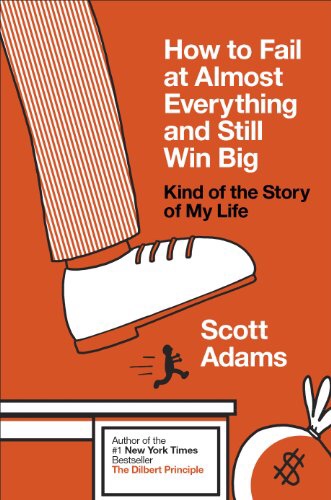
How to Fail at Almost Everything and Still Win Big: Kind of the Story of my Life by Scott Adams

Books about success are largely written by successful people, about their big successes. That approach delivers what people want to read (and the story a successful person wants to tell), Adams says, but it leaves out crucial parts of the story. In this book, Adams–himself an indisputable success–takes us on a guided tour of his lifelong string of failures, and shows how they contributed, over time, to his success. (And in concrete, imitable ways, not just “building character.”) More importantly, he shows you how you can do the same: choose projects and partners and set processes in motion so that even when you fail, you get something out of it, and increase the odds of future success.

Adams’ conversational style and self-effacing manner make this an easy, fun read, and it is brimming with clear, immediately actionable advice.
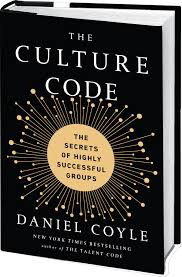
The Culture Code: The Secrets of Highly Successful Groups by Daniel Coyle

Healthy cultures have certain elements in common, whether you’re talking about a military unit, a sports team, or a restaurant staff. In Culture Code, Daniel Coyle profiles successful cultures: the physical practices, beliefs, and emotional landscape that separate stimulating, rewarding, effective cultures from the rest of the pack. Liberally illustrated with examples both good and bad, Culture Code is not just illuminating, it’s applicable. Coyle concludes with an epilogue describing how he put his insights to work in his own life, coaching a team of young writers, with excellent results.

This one is a must-read for church leaders. If your organizational culture does not reflect the profile Coyle is describing–which tracks pretty tightly with how the Body of Christ is supposed to work–it would be worth your while to ask why. And fix it.
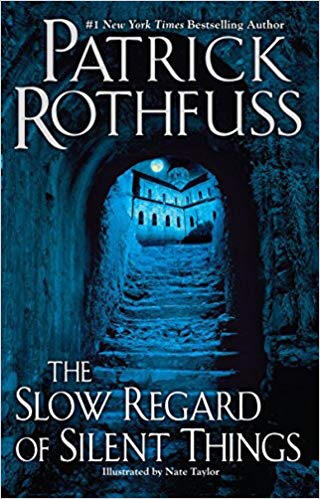
The Slow Regard of Silent Things by Patrick Rothfuss

Slow Regard is an odd little book, and it might not be for you. It’s a week in the life of a singular character named Auri, who lives a life of self-imposed exile in, and under, the world of Patrick Rothfuss’ Kingkiller Chronicle. You need to read book 1, The Name of the Wind, before this one to get necessary context, but that’s not going to be a chore. (This one’s labeled #2.5 in the series, but you can read it after #1; there’s no spoilers.) TNOTW is a stunning achievement in fantasy fiction, and if Rothfuss can deliver the finish that the first two main volumes promise, he will be deservedly mentioned in the same breath with the likes of J.R.R. Tolkien and Frank Herbert. I wouldn’t take anything away from the achievement of the series as a whole…but Slow Regard is important.

In Slow Regard, Rothfuss takes us inside Auri’s head. She’s beautiful, whimsical, deeply intelligent, powerful, and absolutely broken. She sees the world in a unique way, a way that might be totally delusional. Then again, it might be uncommonly perceptive. Or maybe a bit of both; you’ll have to decide for yourself.

And then you’ll have to decide how that maps from her world into ours. It might be one of the more important decisions of your life, because, you see, there are real people like Auri. You can write them off and be the poorer for it. Or you can learn to love them, to dance with the oddness, to profit from the things they see that you cannot. There is so little space in the world for such people; if some corner of your life can hold space for an Auri, that’ll be a kindness well worth doing in itself, and both of you will be richer for it.

If you can stand to, read this book. Whatever you do, don’t skip the author’s foreword.
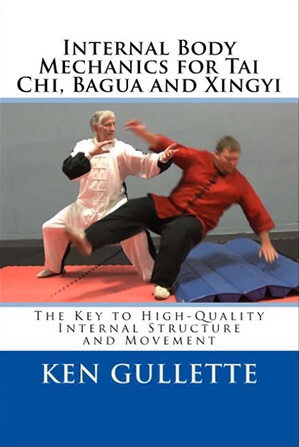
Internal Body Mechanics for Tai Chi, Bagua, and Xingyi: The Key to High-Quality Internal Structure and Movement by Ken Gullette

Despite the title, this one is not just for martial artists. If you’re a massage therapist, an athlete, or you just want to learn to use your body in an attentive, aware way, there’s a lot here for you.

The standard disclaimer applies: there’s no substitute for personal instruction from a qualified teacher, etc. But you learn martial arts by practicing, and there’s a lot here to inform your practice and make it more fruitful.

When it comes to “chi,” Ken Gullette is an uncompromising materialist: for him, there is no non-physical energy, just a very sound–if uncommon–set of body mechanics. Being a Christian, I don’t think the world is quite that simple, but Gullette’s line of inquiry here is undeniably productive. Whatever the truth about chi, there are physical mechanics at work.

Selecting a series of six key mechanics–groundpath, peng jing (which I’m not going to try to explain here), whole-body involvement, silk-reeling (spiral) movement, dantien (pelvic, kinda) rotation, and proper use of the kua (hip hinge)–Gullette walks us through key exercises and practices to develop each one. Start practicing even a couple of these together, and you’ll instantly understand why so much of Tai Chi practice is done slowly.

Gullette has been teaching for many years, and I’ve benefited from some of his and Mike Sigman’s earlier efforts. (Thanks, guys!) This book shows the results of a lot of trial and error to find the best words and exercises to convey these key concepts. The explanations are crystal clear and the photos are shot from useful angles (which is a lot harder than it sounds, y’all.) I’ll be spending a lot of time with these practices as I work to refine my own movement–as a martial artist, as a massage therapist, and as a structurally healthy human being.

***

So that’s my top five of a lot of good stuff–a total of 40 books and 8,389 pages, according to Goodreads, which is kind enough to track all this for me (and sell my data to the highest bidder, no doubt, but who isn’t, these days?)

As with any goal-setting exercise, I review my reading list periodically to make course corrections. A few things stand out to me about this year’s reading list:

  • It’s low on classics and poetry.  Be good to re-read some Shakespeare, Bacon, and Frost, just for the joy of the language.
  • I have some quality theological work on my shelf that I want to read, and didn’t quite get to. I want to do more of that this year.
  • I set the goal low on purpose, knowing that this was going to be a demanding year in other ways, and I might not have time for a lot of reading. And then I way overshot the goal without really trying. I expect this year to be equally demanding, but I should probably raise the goal a bit.

Also with any goal-setting exercise, it’s important to celebrate what went well. My standout items are…

  • I read 40/30 books!
  • I had fun! By setting a number goal, with just a few must-read items, it didn’t ever feel like something I had to do. I was just having a good time reading about whatever interested me. That’s ideal; I retain a lot less if it becomes a chore.
  • I finished The Unshakeable Kingdom and the Unchanging Person. That doesn’t sound impressive, but I’ve been chewing slowly away on that book for three years. (It’s not that long, but it was meaty. I’d read a few pages, and then have to go think about it for a week. So it took a while. I got most of the considerable benefit from it in the first year, but this year I finally finished, which feels like a significant accomplishment.

Set the Captives Free

30 November 2018

Set the Captives FreeWorship is warfare, but it’s far more than that. Worship is ministry to God; an offering to Him. Worship reminds us where we belong, and restores us to that place. It opens up space for us to bring our concerns and requests to God, and hear His voice speaking to us.

Today an album is being released that exemplifies all this. Set the Captives Free is the debut album of Present Glory, a worship band based here in Englewood at Mosaic Community Church.

The album has nine original songs and two covers. The covers are well chosen and well performed, but I want to talk about the originals. The power couple behind the band is Jeremy and Seleste Sault, and most of the originals are Seleste’s work. “Set the Captives Free,” the title cut, is a personal testimony as well as a theological meditation. “No Other Way” is a prayer for deliverance from ourselves. “Power of the Blood” reflects on the freedom we find at the cross. “The Good Shepherd” is a personal walk-through of Psalm 23. There’s more…but you gotta hear them for yourself.

The truths will be familiar enough, if you’ve been around church for a little bit. But there’s something special happening here. Here, you’re not just hearing well-worn truths set to catchy tunes. You’re hearing from someone who knows these truths firsthand, who has lived every word of the song. You’re hearing real worship that happens to have been recorded.

The musical chops are there, but there’s far more than music going on here. I have seen God use these songs to break chains, restore the fallen, heal the broken. I have benefited from them myself. And now you can too.

The album is available everywhere — Amazon, iTunes, Spotify, CDBaby, and probably a bunch more places I don’t know about. (I’m doing well to have the links I’ve got. I don’t know much about music distribution.)

Buy it. Get to a quiet place, and listen. You’ll be glad you did.

P.S. I had a hand in producing the Set the Captives Free Devotional Guide. Enjoy.


A Reading Milestone

17 November 2017

Every year I set a reading goal. This year, it was only 25 books, split between the professionally relevant, the devotional, and fun. For me, that’s a remarkably unambitious goal, and it reflects the fact that I spent the year finishing school and launching a business, which left me precious little time for reading. But I hit my goal last night, finishing the 25th book with 6 weeks to spare. So I’ll probably hit 30 before the end of the year.

Which was my favorite? That’s a complicated question. How do you compare a spirituality of midlife change to a romp through a fictional, Manhattan landscape featuring parkour and dragons, or either of them to a careful appraisal of C. S. Lewis’ philosophical differences with his longtime friend Owen Barfield?

You can’t, on any but wildly subjective criteria.

So let me speak subjectively: overall, for sheer joy of reading, my favorite was probably Owen Barfield’s Worlds Apart, a fictional discussion between a wide variety of specialists meditating together on the nature of reality and human consciousness. If it sounds heady, it was — but I’m a geek to the bone. Reading Worlds Apart was like being in a room with a bunch of people brighter than me, and just barely managing to keep up with their discussion. It was a great deal of fun, even if I did have to read some parts a few times to catch up. I read a good deal by (and about) Barfield in the past year, including a number of his essays and introductions to others’ works, but this one was my favorite. He’ll be changing my thought for many years to come.

More sensible comparisions would be within major categories of books: spiritual, healing, martial arts, philosophy, and so on. So here’s some of that.

Among the spiritual works, the clear standout was Hierotheos Vlachos’ magisterial work Orthodox Psychotherapy. Entertaining it ain’t, but when I was able to carve out the time to read a decent chunk at once, I found a depth and breadth of spiritual insight and compassionate understanding of the human condition that is rare in any tradition. It was helpful to me, and it will be helpful again when I read it next year–which I certainly will.

Among the healing works, Agnes Sanford’s The Healing Light was a clear standout. It’s a classic for a reason. And I have to make mention of Cyndi Dale’s Subtle Energy Techniques. While I widely disagree with Dale in spots, her reflections on her life’s work are well worth reading, and she is a master of her craft.

Among the martial works, I’ve gotta say, Maija Soderholm’s The Liar, The Cheat, and the Thief is a classic. I will read it again. And again. Her subject is sword duelling, which is only of peripheral interest to me, but her insights into the human condition along the way make it valuable for anybody — and again, she is a master of her craft.

Steven Pressfield’s wonderfully readable Turning Pro and Nobody Wants to Read Your Sh*t changed the way I practice my profession for the better, as did Sam Altman’s Startup Playbook. Reading Greg Gutfeld and Vox Day on rhetoric and political strategy may have made me a little spicier, not that I needed any help in that department.

I read fiction by Lee Child, Kel McDonald, Dan Millman, Tony Hillerman, Doug Wilson, and others — and if you have’t read Wilson’s Flags Out Front, you’re missing out — but for sheer entertainment value, Seanan McGuire’s Midnight Blue-Light Special was the most fun.

I’m still in process on a handful of books — when am I not? — but that’s the lineup for most of this year.


Another Book Salad

12 May 2013

I just finished Leading Kingdom Movements by Mike Breen. It’s worth reviewing for sure, but this is also a good occasion to look back over Breen’s output in the last few years. The man has written four books since 2009, which is an accomplishment all on its own, and the four taken together are his team’s distilled experience in a ministry self-consciously modeled on Jesus and Paul to a degree that’s unusual in the modern Christian world. I started reading these books in 2011, and read all four in order, so this will also be autobiographical to some extent.

I want to commend all four of these books to your attention, even if you aren’t even remotely interested in taking the sort of approach to ministry that Breen and company advocate. It’s working really well in some settings. Doesn’t mean God’s calling you to try to replicate it in yours. However, in my experience, there is great value in studying the work of the Holy Spirit in Christ’s Church — learning how God is pleased to work, what He is presently doing, and so on. Great value. These four books taken together will give you a good look at a fascinating slice of the Spirit’s work in the contemporary church.

***

For me, the journey began with Building a Discipling Culture. This is an outstanding book. Organized around a series of shapes, it seems at first kind of hokey and overproduced. In a way, it is exactly that. Breen’s target market for this resource is American megachurches who have lost their way when it comes to really making disciples, so the hokey slickness is contextualization. This is a resource on disciple-making that you might get a purpose-driven church to buy and implement. It’s slick, it teaches easily, and it’s memorable, easy to keep track of all the material. Mentally walk through the shapes — circle, semicircle, triangle, square, and so on up to octagon — and you’ve got it all. Most importantly, once you get past the packaging, the content is deeply biblical.

But that is most definitely not all. Accompanying the book is the social model, called a huddle, that helps to inculcate real discipleship. See, if you come from a teaching-heavy tradition, it’s easy to degenerate into teaching yet another “discipleship” curriculum, from which your congregants depart with full notebooks and empty lives. Huddle is not another “discipleship group,” exactly. It is a group of 3-8 people who are presently in leadership somewhere (at least in a family leadership role), and it provides the opportunity for some formal teaching and debrief time. Huddle is not discipleship by itself. It is one component; the other key component is access to the leader’s life. participants will be invited to join the leader doing this or that — and not just ministry stuff. You are as likely to be invited out for a beer as you are to be invited to help clean up after the youth group’s annual movie-and-silly-string night. When Jesus went to a party, after all, He took His disciples. Why shouldn’t we?

I’m here to tell you, being huddled and working my way through the material in Building a Discipling Culture in that context was life-altering. I’m a teacher by gifting and calling, and I’ll never see teaching the same way again. I recommend it highly — but in a proper context. Don’t just rush out and buy the book. Even if you have to do it by distance (which is how the guy who huddled me had to do it) find your way into a huddle and go through it that way.

***

Breen’s second book in the series is Launching Missional Communities: A Field Guide. I’m just going to admit at the outset that of the four books, I’ve found this one to be the least helpful. Full to the brim with practical nuts-and-bolts advice, warnings, and how-tos, the book is designed to be very helpful, but in a particular context. The target audience is a large church seeking to “go missional.” Now, the way that Breen and company mean it, I’m a fan of missional, so that’s not my problem. My problem is that I’m not at the helm of a large church. Or a medium-sized church. Or even a small church, really. I’m a shepherd-at-large in the One Church in Englewood, doing a variety of things that may ultimately result in a church plant, but haven’t so far, may never, and if they don’t, that’s okay. So as advice, the book is pretty useless to me, and it’s too thin to be a good doorstop.

I don’t say this just out of a general sense that I haven’t got the resources to pursue the plan Launching Missional Communities recommends. I say that because we did actually try to follow the model laid out in the book as closely as we could, and in our context it failed spectacularly. I hasten to add that I know of other people right here in Denver who are applying the same model with roaring success. I’m not at all blaming Breen and company for our failure. Different contexts call for different approaches.

However, I commend the book to you whether you’re in a context that’s amenable to its approach or not. It provides critical nuts-and-bolts insight into the advice that Breen and his crew are giving, and you may find, as I have, that while you can’t follow the track laid out in the book, you might be able to reverse-engineer some pieces — same truths, different approach — to your great benefit.

Autobiographically, I want to add that as I was grappling with all this, and griping to my mentor that “the 3DM model” doesn’t work all that well in our situation, he crisply informed me that there is no such thing as “the 3DM model.” 3DM’s staff of mentors and disciplers, right up to Mike Breen himself, was unanimous on the point. I pushed back pretty hard on the grounds that what they were selling in the field guide and the seminars certainly was a model. I was right — it was. We were disassembling that model and making use of the spare parts anywhere we could, in the context of entirely different social vehicles and a different model of ministry. But my mentor was right as well, as we shall see.

***

Multiplying Missional Leasers is the third book in the series, and focuses on recognizing, training and launching out leaders who will go and make more leaders — from “little” leaders who will never lead more than three or four people at a time to “big” leaders who will lead thousands. Breen shows a rare grasp of the nuance involved in the task. Most leadership development material focuses on the “big” leaders, and tries to teach prospective leaders how to develop (or mimic) the charisma and organizational talent that characterizes high-capacity leaders.
Breen doesn’t go that route. Leaders can have any sort of gifting, Breen says. He proceeds to devote a considerable portion of the book to unpacking what leadership looks like in people with different kinds of gifts. It proved a valuable addition to my own understanding of how to be a leader within the bounds of the gifts God gave me.

***

Leading Kingdom Movements is the latest in the series, and conceptually the most important of the lot. In this book, Breen finally gives away the core truths we had been forced to discover somewhat earlier: it was never really about missional communities, or huddles, or any of the social vehicles. The model of moving a large church into a culture of disciple-making where people were empowered to launch and maintain missional communities — that model was just a means to an end. In many contexts, it’s a useful means, but still just a means.

The end, the telos of it all, is the big-C Church taking on the character of an extended family on mission. The rhythms and relationships that characterize an extended family with a mission beyond itself create an extraordinarily effective culture for gospel witness and disciple-making. Getting there has always been the real point. The social models of huddle and missional community were really about bringing people into familial relationships with one another, and immersing them in rhythms of life that follow the examples set for us by Jesus and the apostles.

Explaining those rhythms and relationships through an extended treatment of the life of Paul takes up the latter half of the book, and it’s excellent reading. There is some necessary conjecture along the way — filling in the gaps with what we know from the history and culture of the time — but nothing extravagant. Breen’s treatment is sound on the essential points, and well worth your time.

***

I have said throughout this review that there are four key books, and as far as the how-to part of Breen’s oeuvre is concerned, that is true. There is, however, a fifth book. Written very early on, Covenant and Kingdom is a brief treatment of the story of the whole Bible, told around the two key themes in the title. Covenant and kingdom, relationship and responsibility, family and mission, being and doing. If you break out in hives at the very mention of the word “missional,” if you are a traditional-church person to the very core and intend to have no truck with anything like what Breen and 3DM are up to, if you are not going to invest in any of the four books I mentioned above — this book is still for you.

There are other themes worth expounding through the Story, other strands that you can trace through the Bible from end to end. This is not the only way to tell the tale. But it is a way to tell the tale, and a very good one, too. For many of you reading this review, I guarantee that as you read Covenant and Kingdom, the Bible will ‘click’ together as a whole story in ways that it never has before. The way it will click together, you won’t just see the Story in the Bible — you’ll see the Story going on in your own life, too, and in ways you never noticed before.

If you get nothing else by Breen, get this one.

***

I will close this review with one final note. Print editions of the 3DM books run on the slightly expensive side. This is partly because the physical books are designed to take a pretty good beating, so they’re a bit higher quality than your average mass paperback. It’s probably also partly because the 3DM team is supporting themselves, in part, by selling books. However, all the above books are also available as e-books for much less than you’d pay for paper, so if money is an issue, you might look into that option.

Illustrations do play an important part in these books, so effective reading sometimes calls for monkeying with the enlargement settings on the smaller e-readers (like the Nook Simple Touch, for example), but it can be done. I myself read two of the above books on my Simple Touch.