An Exercise in Gratitude

24 December 2024

Some while back, I found myself in a situation where I needed to develop a foundation of gratitude before I would know how to proceed. I created the exercise below for myself to meet that need. I hope you find it helpful.

  1. What are five things I’ve done this week that I absolutely loved?
  2. What do I love about my home?
  3. List five things around me right now that I’m glad I don’t have to live without.
  4. What are three gifts I’ve received from my upbringing?
  5. Who makes me feel seen in daily life? How they do that?
  6. What am I grateful for about…
    • my financial situation?
    • the way I handle a crisis?
    • the people I surround myself with?
  7. What was something beautiful I’ve seen recently? What did I love about it? Is there a particular sensation, or feeling, or idea?
  8. Go back through my answers to these questions and thank God for every single one of them, individually. They’re worth it, and He’s worth thanking.

I Need Your Help

17 December 2024

In 16 years and over 700 posts, I’ve never asked for a dime. Today, I’m asking. (Names marked with an asterisk* have been changed to protect privacy.)

Every Saturday night at 5:00 pm, I open up the doors of a place down on South Broadway. It’s called Centerpoint, and it’s a church of sorts, specifically for homeless (and homeless-adjacent) folks. Every week, my friend Shawn* and a few other people will be outside waiting when we open; more will filter in as the evening progresses. The room is well-lit and comfortable enough: warm in winter and cool in summer. There’s tables and chairs and music. A few steps from the door, the smell of supper hits you. We’ve had everything from chili and fry bread to spaghetti to grilled chicken to falafel and Lebanese food. Our volunteers are amazing cooks.

For the next couple hours, this place will be our guests’ refuge from the weather, but honestly, that’s the least of it. “Tim, I haven’t talked with another human since last week when I was sitting in this same chair talking to you,” Roger* told me one evening back in 2020. “People don’t make eye contact,” he said. “They pretend you’re invisible.” I’ve never forgotten that. The most important thing we do here is treat people made in the image of God like they’re the image of God, no matter how they show up.

Some are barefoot, clothed in tatters. Some are high or drunk. “I have three simple rules,” I tell them. “Don’t come in drunk, don’t start a fight, and if you don’t start a fight, we’ll pretend you didn’t come in drunk.” As long as it’s safe for everybody, we’re here for it. We mean it when we tell you to come as you are. Even stone cold sober, some of our folks are so mentally ill they have a hard time staying in touch with reality.

Those conversations can get really wild. I’ve been told about how Martin Luther King won the Revolutionary War, how the city council is trying to sell all the parks, how all the churches and judges and cops in this town are conspiring to squeeze the homeless (it’s all about money, somehow), how the Council of Nicaea set up a satanic communion ritual in place of the Passover. Some of these we let pass; others we discuss in more detail. We also get a surprising amount of cult nonsense, both from the usual suspects and some that are new to me. Most recently, I was informed that the existence of God the Father implies God the Mother, who is apparently a Korean woman. “Jesus said He’d come back from the East,” Jack* said. “You can’t get any further east of Jerusalem than Korea.”

“You are welcome here any time,” I told him. “That stuff is not.” He ate his supper and left. On the way out the door, he looked back at me. “I’m trying to help you,” he said. I wasn’t sure he’d be back, but he drifts in about once a month. (He still believes that cult has a corner on the truth. We’re working on it.)

Some folks barely say a word to us. They’ll bolt down their food and leave as fast as they can. Or they’ll eat, then lay their head on the table and fall asleep. Our new volunteers sometimes ask if that bothers me (to middle-class people, it feels disrespectful). No, I tell them. Where else can these folks sleep safely, even for an hour? Here, you’re safe. Nobody will hurt you, nobody will steal your stuff. It’s an honor to be trusted that way; we’ve earned that trust, and I’m proud of it.

Some will ask about resources: a tarp, a sleeping bag, food, housing, jobs, socks, a place to get mail. We have strategic partnerships with organizations that do all those things, and we direct them to the right place. For the last few years, we’ve been blessed to have Micah–my daughter in the faith–work with me on Saturday nights and with one of our partner organizations, a day program that’s open Tuesdays and Thursdays. She furnishes a bridge from us to a lot of those services, and invites people from the day programs to come join us. (And we’re paying her so little that honestly, it’s embarrassing. I’d love to be able to pay her better.) Micah’s also a serious church history nerd, and it’s been great to have her bring facts and logic to the weirder conversations about church history.

Not all the conversations are weird. Some of it’s just ordinary life: romantic difficulties, friendship troubles, difficulties at work. (Not-so-fun fact: quite a number of our homeless folks have some sort of job. They just can’t afford rent anywhere.) Often a Bible study will break out as we talk about one thing and another. I’ve delivered sermons down here, but the best things I’ve ever said have probably been in the impromptu Bible studies, dealing directly with someone’s immediate concerns. Sometimes the questions are more theological, and we can do that too. I’ve been telling people for years that we only do three things: good food, good company–hey, here you are!–and a little bit of church. The Bible studies are part of that.

Around 6:30, we’ll have a brief communion service. We preach the gospel: “…we proclaim the Lord’s death til He comes, and that means we look back to the day that Jesus was nailed to the cross, and every sin, every character flaw, every weakness, every sickness, every dark thing that stands between you and God–all of it was nailed to the cross with Jesus. Died on the cross with Jesus. Was buried in the earth with Jesus. And when God raised Him from the grave three days later, He did not come out dragging a Hefty bag of your crap. It’s gone; He took care of it all. We look forward to the day when Jesus brings His resurrected people to a resurrected earth, and we live with our God forever, apart from sin and sickness, the way we were always meant to.” We commission our people: “You are blessed with the presence of Christ here so that you can go out into the world and be the presence of Christ there. So go, and be a blessing!”

Some do. Long-term, being a blessing usually means finding fruitful work and getting off the streets, but there are a lot of short-term ways to bless. I’ve seen Jesus-following homeless people share food, shelter, life-saving information. One 10-degree night, I saw Bob* give up his spot in a shelter to help a newly homeless kid who literally didn’t even have a coat. He may have saved that kid’s life.

When 7:00 rolls around, we close. After our guests leave, we clean up and debrief as necessary. We fight for every quarter-inch of growth with our guests, but our volunteers grow like weeds. It’s a challenging ministry, and it quickly and deeply teaches the value of human connection in a way that very few ministries do. Over the years, many of our volunteers have moved on to other ministries, seasoned by their time with us. It’s an honor to be part of their journeys. (A couple of them even ended up getting married! I got to do the wedding, and that was really sweet.)

A few years ago, I started a periodic study group. After Centerpoint closes, we work through a book of the Bible in Greek. It was always a very niche market, and in the end, only Micah stuck with it. Her exegetical skills have grown by leaps and bounds, and I’m proud of her progress. We’ve worked through Jude, 1 and 2 John, and we just finished Philemon. She’s been interested in tackling a longer book, so we’re starting 1 Timothy. I’d love to recruit more people into that study. (If you’re in Denver, you’ve had first-year Greek, and you’re willing to come help feed folks a couple Saturdays a month, give me a shout!)

That’s it. That’s what we do.

Look, I’ve never been good at fundraising, and I’m still not. But we get all this done for under $3,000 a month, and we need help. In the past a handful of organizations have been very generous with good-sized one-time gifts, but that money will run out in March, and as far as I can see, there’s no more where it came from.

I think this work is worth doing, and if y’all will help us fund it, we’ll keep doing it. Like I said, we can sustain everything we’re doing right now for less than $3,000 a month.

If we can’t continue, well, we can’t. Most ministries die eventually. If Centerpoint’s time has come, that’s in the hands of God. But although March is our snowiest month, April and May can be pretty rough, and I’d hate to stop when the weather’s still nasty. So the very least I’d like is $6,000 to get us through the end of May.

If you’d like to help us out, instructions are below. As my friends with the cardboard signs say, “Anything helps!”

The easiest way to donate is through our online campaign with Zeffy. Click that link, and follow the instructions.

If you prefer Paypal, the associated email address is rcvrchurchonline@gmail.com. Put “Centerpoint” in the comment box, and the funds will make their way to us. (You’ll see the church’s legal name as Englewood First Assembly of God. That’s us.)


Sax in the (New) City

3 December 2024

The best saxophone player to ever grace planet Earth was born in North Africa in 425 BC. She lived her whole life without ever touching a saxophone. Some day 8,000 years from now in the New Jerusalem, she’s going to pick up a saxophone for the first time ever, and we’re all going to be astounded. 

It’s going to take another thousand years before you and I get to hear her. She doesn’t like crowds all that much, and prefers to play really intimate venues. When we try to get her to play somewhere big so more people can enjoy it, she just laughs. “Are you afraid we’ll run out of time?” Gotta admit, she’s got us there.

Of course this little parable is exactly that—a parable. Even if (God’s sense of humor being what it is) every word of it turns out to be true, there’s certainly no way I could know that now. And that’s exactly my point. We live in the constant presence of an eternity so wide and deep we can’t actually know its extent, and yet we must live in a way that takes it into account.

This is one of the holy uses of imagination, as over against knowledge: imagination helps us reckon with realities too big to know. It helps us steer in the right direction, even when we don’t quite know where exactly we’re going, or what it will look like.

We know we are built for eternity. This life fits us out for eternity, but after we die, the vast majority of our life is still in front of us. (Side note: if you’re worried that you’re not living up to your potential, rest assured, you’re not. There’s not a ghost of a chance that anybody built for eternity could realize all that potential in a mere 80 years.) We know that, handcrafted for eternity, we are bound for the New Jerusalem, where we will encounter the saints of all the ages who are also bound for the same destination. What will that look like? We have very little idea, and yet we need to live our lives in light of the truths we know.

And so we feed our imaginations on the wild things that might be possible in such a reality…because the reality God made really is that wild.


Can We Afford It?

20 November 2024

Treating someone graciously is a form of generosity. As with all forms of generosity, graciousness is greatly cramped when we don’t think we can afford it. This is true whether we can actually afford it or not.

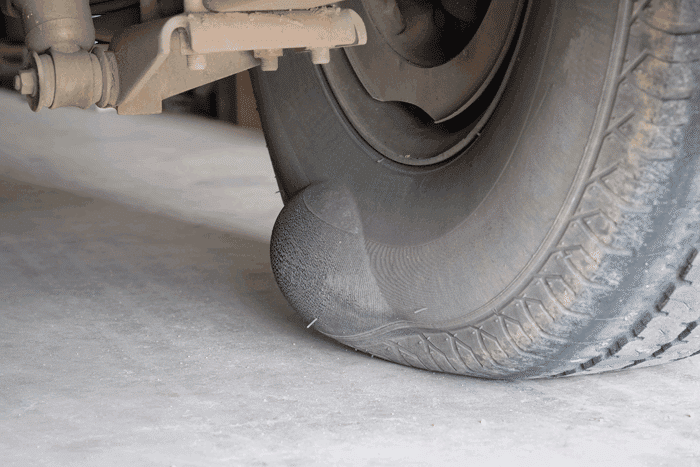
Say we have a single mother in the church who asks one of the men in the church to come look at her tires. It seems to her that something’s wrong, she says. He goes out into the parking lot, and the tire has a great big bulge in the sidewall.

“I don’t get paid until Friday,” she says, “and I have to pay rent out of that. Do you think it can wait until I get paid again in two weeks?”

No, it cannot. Now suppose as they’re talking about how she really shouldn’t delay replacing the tire, another fellow walks over and also takes a look. He agrees with the first guy that the tire should be replaced immediately.

Now suppose that one of these guys has $30,000 in the bank and no pressing need for it, while the other has $700 to his name, and his own rent payment looming at the end of the week. Which one of these guys is going to help this lady pay for tires?

You’d be tempted to say that of course the first guy will do it, but if you’ve been around people a little, you know better than to be so sure. We’ve all known people with tens of thousands of dollars who didn’t think they could afford to part with ten bucks, and we’ve all known people with only a few hundred who would buy you lunch if you looked hungry. Generosity does not depend only on some objective measure of what you can afford. Generosity depends on what you believe you can afford.

The guy with a few hundred bucks to his name, who goes and buys the lady’s tires? He believes that God has been good to him. He believes that God has given him everything he has, and everything he has is therefore at God’s disposal. He believes that God put him here to help take care of the tires, and that God knows the rent is due at the end of the week, and He will take care of it. He knows himself to be living in the lap of God’s largesse; why would he struggle to share? “You can’t outgive God!” he’ll say. Or “I shovel it out, and God shovels it in, and He’s got the bigger shovel.”

I’ve known a bunch of guys like that over the years; had occasion to be one now and again. Let me tell ya: it’s a lot of fun giving God’s money to people who need it! You maybe feel a little dumb come Friday afternoon and you’re still not sure how the rent gets paid, but you know what? I’ve seen God come through over and over and over again. (Standard disclaimer: It’s possible to overdo giving just like it’s possible to overdo anything else. I’m not saying you should just be a moron with your money; I’m saying you should be generally wise, and also know that at any given moment, God might call you to do something that looks really foolish. He gets to do that; everything you have is His. When He does, know that He’s got your back, and He’s good for it.)

To return to the observation I began this post with, it’s not just money. I digressed into money because money is easy to talk about, but you can be generous (or not) with any resource you have. It might be your time, your effort, your expertise. It might be a little space on your web server, or a little space in your garage for someone to store a couple boxes. It might be a late-night run out to the airport to pick up an old friend’s stranded kid, and another run back out there in the morning to get the kid on the next flight out. It might be your sympathy. It might mean showing grace to someone who–this being the meaning of grace–doesn’t deserve a bit of it.

In any of these cases, the key to generosity is the belief that you can afford it, and that, in turn, depends on your gratitude for what God has given you. This is particularly the case with showing sympathy, moral grace.

People who feel a need to signal virtue, people whose virtue is brittle, shallow, only skin-deep, can’t afford to be generous. It would endanger their fragile bona fides. They need to be hard on others, critical, scathing even, lest somebody begin to wonder if they themselves are somehow soft on that particular sin. When you’re about the impossible task of establishing your own righteousness, there’s no audience too small or occasion too petty.

Go thou, and do un-likewise. But this is not something you’re likely to be able to fake, or to muscle through as a raw exercise in self-control. You should be a deep and genuine conduit of God’s grace, and that means you need to become grateful for God’s grace to you. So begin to meditate on God’s grace to you. If you need a place to start, you could do worse than Ephesians 2:1-10. Let’s get about it.


Changing the Slope?

2 October 2024

Most people object bitterly to being on the downhill side of the slope of oppression, but they don’t actually want a level playing field. They just want to claw their way to the uphill side of the slope. To make it concrete: over the course of human history, many, many people have objected to being slaves, but relatively few people have objected to being masters — which is to say that mostly, people don’t actually object to slavery. There have been plenty of slave revolts, but very few times when a society of masters voluntarily surrendered their role. (And by “very few,” I mean it’s never happened ever, not anywhere, except in the Christian West, where it’s happened culture-wide, twice.)

As regards slavery, hopefully we’ve learnt our lesson, and we can use that big picture to have a look at the details of our own lives. Want to know how someone really feels about justice and oppression? Watch how they behave toward people who are downhill from them. There are always moments when you find yourself in a superior position, whether it’s with restaurant servers, grocery-store baggers, children, pets. How you behave in those positions will reveal your real attitude toward injustice and oppression. It’s really a disturbingly simple question: when you can do unto others what they can’t do back to you…what do you do? How do you treat people when they’re at your mercy?

Every human faces this question, and every human has favored work-arounds to justify their own injustices to themselves. The white supremacist talks about the “natural order;” the activist talks about “punching up;” no matter how you talk about it, the matter reduces to that simple question: How do you treat people who can’t (or won’t be allowed to) respond in kind?

If you are generous and honest, well done. If you’re reacting to this post like I touched your eyeball, well…repent.


The Way Your Story Works

12 September 2024

We are the stories we tell ourselves, but not in the simple way where we just get to dictate everything. The world is not a blank screen; there is a big story happening around us, and we all fit into it.

Your actual life is a product of the interaction between the big story going on around you and the story you tell. If you tell yourself nothing but kitten and rainbow stories, you don’t get a kitten-and-rainbow life; what you get is a life where you enjoy some things and are hopelessly out of touch with others. If you tell yourself nothing but grim stories? Same, without the enjoyment. Some people seem to like it that way, but neither of these kinds of folks accomplish much, nor are they much fun to be around.

But if you can tell yourself a story where everything is not perfect, but it is meaningful; where you fail, but there’s room to keep trying; where you have a purpose, even if you don’t quite know what it is yet…then the story of your little world has gear-teeth to mesh with the story of the world that is happening around you.

That’s when you start to get somewhere.


Two Traps

6 August 2024

Every three-month-old is totally honest and nonjudgmental about their feelings. As we grow up, we start to lie to ourselves about our feelings. We try to deny what’s actually happening and make ourselves feel what we “should” be feeling. That’s an adolescent trap, and most of us fall into it.

It’s easy to escape the trap by regressing to babyhood. That way lies our modern cult of “authenticity,” and it is yet another trap. Revolting against maturation doesn’t help. We have to find a way to be honest and face what’s really happening, but there’s more to adulthood than blabbing whatever you’re feeling.

Why is that? Because your feelings are not trustworthy. Feelings do not arise from some magically unsullied place within us. Just like we can say something we have no right to say or think something that’s totally wrong, we can be angry without just cause, hugely and self-indulgently sad about trivialities, jealous of something to which we have no right, detached and unfeeling about someone that we owe better than that.  

“Trust your feelings” worked out ok for Luke Skywalker (except for that bit where he kissed his sister), but we ain’t fictional characters. Our feelings are as fallible as the rest of us. 

So honesty is important, but it’s just the beginning. Then we discriminate: is this legitimate? How we proceed from there depends on the answer to that question. If the feeling is based on misbeliefs, magical thinking, poor boundaries, etc. — in other words, on my own toxic habits of mind — then I need prayer, therapy, exercise, maybe all of the above. On the other hand, if I’m having a sane reaction to an insane world, more therapy isn’t the answer; that’s not where the problem is. 

Discernment matters. It’s what keeps you from going to war with society when the problem is inside you, and it’s what keeps you from anesthetizing yourself with more therapy when you’re being called to change the world.


Actual Humanities at Princeton?

1 June 2024

A propos of my recent post Not Dead, Just Relocated, I just ran across a Free Press story about a professor who is trying to revive the humanities at Princeton, of all places. May his tribe increase!


Coming Soon!

20 January 2024

I’ll be joining Chris Morrison of Gulfside Ministries for a special live podcast on Hebrews 6 on January 27th at 10 am Mountain Time. Come join us!


Two Books That Changed My Teaching

9 January 2024

When someone comes to me for discipleship, I tell them that I only teach four things: how to read, how to pray, the story of our people, and fruitful living. (I have a specialty in practical doctrine of creation and dust-and-breath anthropology, but that falls under the heading of fruitful living.) Today, I’d like to highlight two books that have changed my approach to teaching the more recent parts of the story of our people.

The historical development of science is a bit of a puzzler for most people. Modern science was created by Christians, and arguably couldn’t have been created by anybody else. If you rewind a few centuries, you find people like Robert Boyle, Matthew Maury, Michael Faraday, Lord Kelvin, and many more–faithful Christians moved by their Christian worldview to investigate the world God made. They would be shocked and puzzled to discover that today everybody “knows” that science and Christianity are in conflict; they never found that to be true. I had long been aware that the “conflict thesis” was nonsense, and worse, carefully constructed propaganda (about which, see Of Popes and Unicorns for the riveting tale, but that’s not why we’re here today.) But the history around Draper and White and their promotion of the conflict thesis never quite explained the speed with which Christians adopted it. 

Paul Tyson’s A Christian Theology of Science has filled that gap. Tyson shows how the roots of the conflict thesis lay, not in 19th-century academia, but in currents of thought that run back to the medieval European church. He also shows how deeply we’ll need to repent to come back to a proper understanding of science’s place in the world. (I’m not with him in his largely negative appraisal of young-earth creationism, but he’s fair, and offers a rare compliment on pp.145-6. I’d love to buy the guy a beer and chat about it for a couple hours.) It’s not a thick book, but expect to expend a little skull sweat getting through it. It’ll be worth it. You’ll find that it inspires you to think differently — and harder — about contemporary discussions in which both religion and science have a stake.

In a similar vein, American Nations: A History of the Eleven Rival Regional Cultures of North America by Colin Woodard sheds light on the development of American political thought and practice. It’s obvious enough from a glance at the news that today, the people of the United States do not have a single dominant conception of what it means to be American, what the good life is, or what good government should look like. Woodard’s thesis it that we never really had that, and he starts in the 1500s to demonstrate his point.

I was raised at a history teacher’s knee, and my father would often contrast the Plymouth Bay Colony and Jamestown, pointing out their rival religions, attitudes, and forms of life as a key lens through which to view the development of the early American republic. Woodard takes that observation much further, and his historical unfolding of the American founding is really helpful. We frequently talk about the “Founding Fathers” as though they were a single group of people with a single shared set of values; that is simply not the case. Rather, the documents of the American founding represent a struggle to hammer out a working synthesis among multiple competing visions. I would argue that synthesis, despite its notable imperfections, was largely successful, and remains an important guiding light for us today.

Woodard maintains that the eleven distinct and competing cultures he describes continue to operate today (here’s a county-by-county map), and offers his synthesis as a broadly useful lens through which to view and explain current cultural battles. That claim seems to be where he has garnered the most criticism. You’ll have to make your own determination about that. I will say that I’ve found his eleven nations a helpful filter in considering some interpersonal conflicts. If you’d like a quick overview, this podcast is a good place to start.